Master Groups Outdoor Construction Creates a Strong Foundations for Strong Harvests
Agriculture depends on careful planning, efficient resource management, and reliable infrastructure. While farmers often focus on soil quality, crop selection, irrigation, and livestock care, one important element supports nearly every part of agricultural operations: fencing. A well-built fence provides structure, protection, and organization, allowing farmers to manage land effectively and maintain productive environments. This is where the principles behind Master Groups outdoor construction connect with modern farming needs.
Quality outdoor construction solutions, particularly durable fencing systems, help agricultural properties create secure spaces where crops can grow, livestock can be managed, and resources can be protected. Much like a strong foundation supports a building, dependable fencing creates the framework needed for long-term agricultural success.
The Essential Role of Fencing in Modern Agriculture
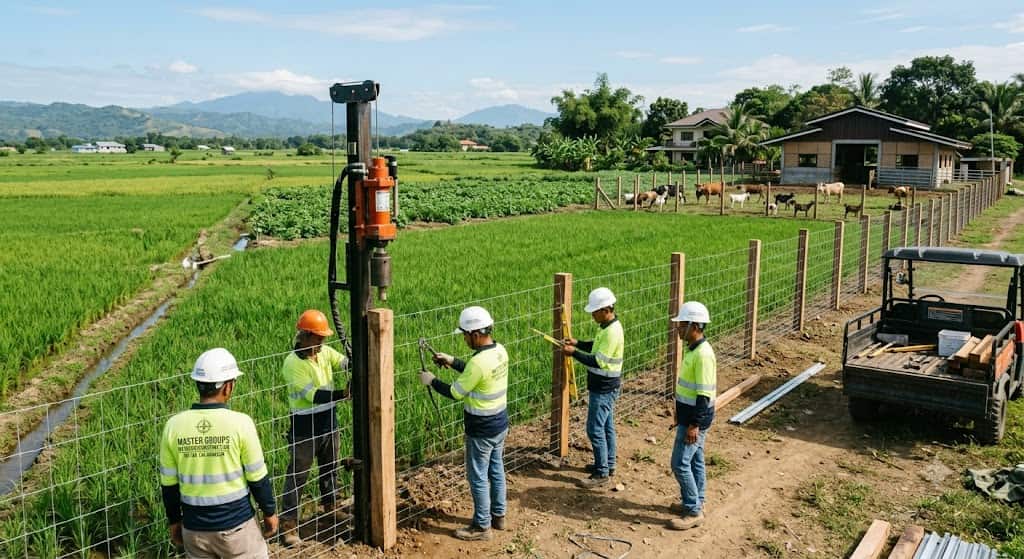
Fencing has always been an important part of farming, but modern agricultural operations require more than simple barriers. Today’s farms must manage larger areas, protect valuable resources, and maintain efficient workflows.
A properly designed fencing system helps farmers create clear boundaries between different sections of their property. This organization allows landowners to separate grazing areas, protect crops, and manage livestock movement more effectively. Quality fencing supports farming operations by helping with:
- Livestock containment and safety
- Crop protection from animals
- Field separation and rotation management
- Property security
- Efficient land utilization
For farmers of livestock, well-built fence creates a controlled environment where animals safely move without worrying that they may be able to escape or enter restricted areas. On the other hand, for crop producers, fences help reduce damage caused by wildlife and unauthorized access.
Without reliable fencing, even well-managed agricultural land can face unnecessary risks that affect productivity and profitability.
Protecting Livestock Through Durable Construction
Livestock management requires careful attention to safety and organization. Animals need enough space to move naturally while remaining within designated areas that support proper care.
Strong fencing solutions provide farmers with greater control over animal movement. This is especially important for farms managing multiple species, breeding programs, or rotational grazing systems. Different agricultural needs require different fencing approaches, like for example:
- Livestock farms may require strong barriers designed for durability and animal safety.
- Crop farms may prioritize fencing that prevents wildlife intrusion.
- Large properties may need systems that divide land into manageable sections.
The quality of materials and construction methods directly affects how well a fencing system performs over time. Weather conditions, animal behavior, and daily farm activities can place significant stress on outdoor structures.
Professional outdoor construction solutions help ensure fencing is built with durability, functionality, and long-term performance in mind.
Supporting Sustainable Land Management Practices
Modern farming increasingly focuses on sustainability and responsible resource management. Fencing plays a valuable role in helping farmers implement environmentally conscious practices.
One example is rotational grazing, where livestock are moved between different sections of pasture.
This approach allows grasslands to recover, improves soil health, and prevents overgrazing. Proper fencing makes these systems easier to manage by creating clearly defined grazing areas.
Fencing can also support conservation efforts by protecting sensitive areas such as:
- Water sources
- Young crops
- Natural habitats
- Soil restoration zones
By controlling access to specific areas, farmers can maintain healthier ecosystems while continuing agricultural production.
In this way, fencing is not only a physical structure, it is a management tool that supports more balanced relationships between farming activities and the natural environment.
Combining Outdoor Construction Expertise with Agricultural Needs
Agricultural properties have unique requirements that differ from residential or commercial spaces. Farm fencing must withstand environmental conditions, regular use, and specific operational demands.
Farmers investing in outdoor construction can find the best solution that fit their needs, from land, climate, and specific goals. Factors such as terrain, livestock type, maintenance requirements, and future expansion all influence the ideal fencing design. A well-planned fencing project considers:
- The layout of the property
- The purpose of each enclosed area
- Material durability
- Ease of maintenance
- Long-term operational needs
By approaching fencing as part of a broader agricultural infrastructure strategy, farmers can create systems that improve efficiency and reduce future challenges.
Strong construction practices also help minimize frequent repairs and replacements, allowing farmers to focus more resources on production rather than maintenance.
Building Agricultural Success through Reliable Infrastructure
Farming success depends on many interconnected elements, and strong infrastructure is one of the most important foundations. Quality fencing provides farmers with the organization, protection, and control needed to maintain productive agricultural environments.
The connection between Master Groups and farming highlights a broader principle, effective outdoor structures support the activities that depend on them. A reliable fence protects investments, improves land management, and creates safer conditions for both livestock and crops.
As agriculture continues to evolve, durable and thoughtfully designed fencing solutions will remain essential. By combining practical construction knowledge with an understanding of farming needs, outdoor infrastructure can help create stronger farms, healthier landscapes, and more sustainable harvests for the future.